Category: Education & AI

  • AI in Education: Transforming Learning for All

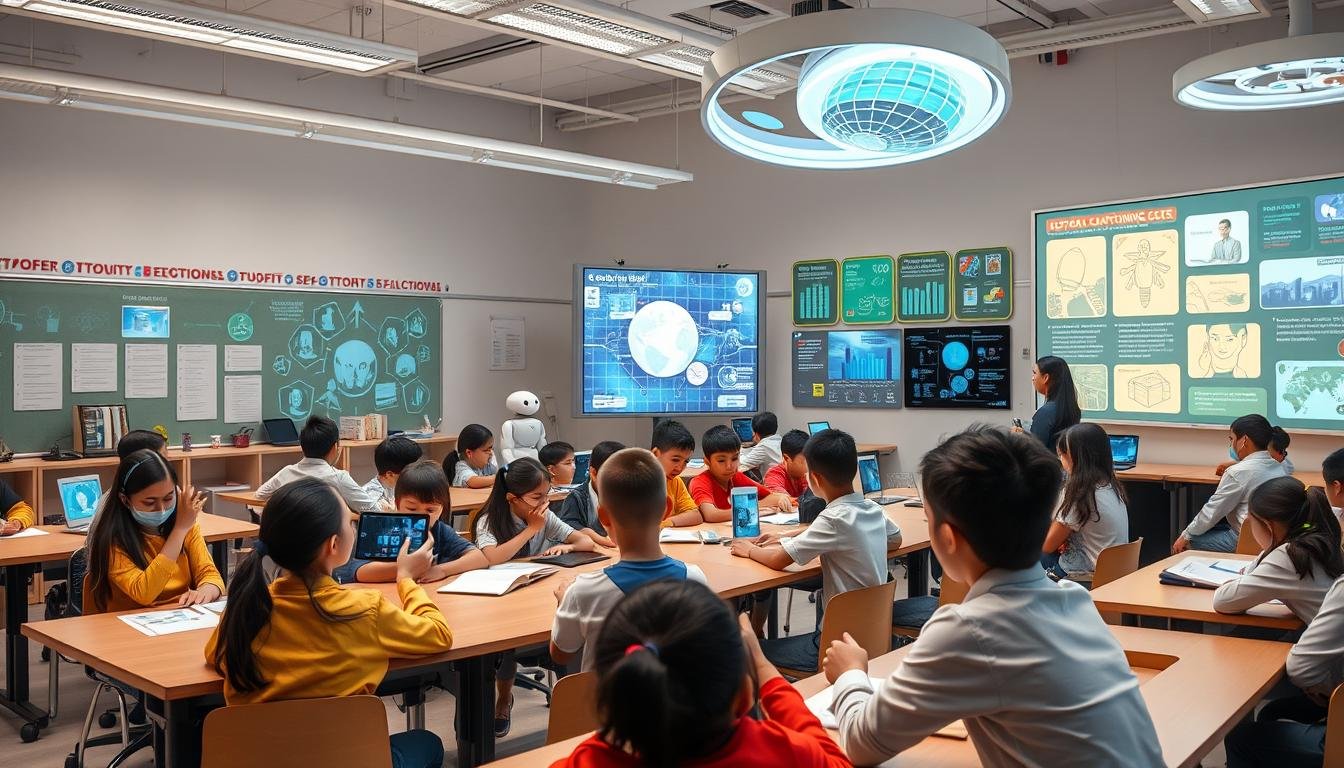
    Did you know over 80% of educators think AI will change how we teach and learn? This shows how important AI is becoming in schools and universities. They are quickly adopting this new technology.

    We will look at how AI is changing education. It’s making learning more personal and engaging for everyone. By understanding AI’s role in education, we can get ready for the future of teaching.
    Key Takeaways

    • Artificial intelligence is revolutionizing the education sector, with over 80% of educators believing it will transform teaching and learning.
    • AI-powered technologies are enabling personalized learning experiences, adaptive instruction, and individualized feedback to support student success.
    • Intelligent tutoring systems and virtual assistants are enhancing the overall learning experience, while AI-assisted teaching is improving efficiency and outcomes.
    • AI is fostering greater student engagement through gamification and immersive learning experiences, as well as providing valuable insights for educators.
    • The integration of AI in education requires careful consideration of ethical implications and responsible implementation to ensure equitable access and positive outcomes for all learners.

    Introduction to AI in Education

    The education world is changing fast, and AI is key to this change. AI is making learning more personal and flexible, meeting the needs of all students. We’ll look at how AI is changing education and why we need better learning tools.

    What is AI and its Role in Education?

    AI lets machines think and act like humans, doing tasks that need human smarts. In schools, AI helps understand students better, giving them feedback and support. This way, teachers can tailor lessons to each student’s strengths and weaknesses, helping them learn more.

    The Need for Transformative Learning Solutions

    Old teaching methods can’t keep up with today’s students. The importance of ai in education shows we need new, flexible learning tools. AI tools can make learning fun and interactive, helping students understand and remember more.

    Also, ai-powered learning tools can help teachers do their jobs better. By handling tasks like grading, AI lets teachers focus on teaching and helping students. This way, teachers can spend more time on what matters most.

    “The true promise of AI in education lies in its ability to personalize the learning experience, empowering students to reach their full potential.”

    Personalized Learning with AI

    In today’s digital world, personalized learning is changing education. AI technologies are making learning more tailored and effective. They help create learning paths that fit each student’s needs.

    Adaptive Learning Paths

    AI-powered learning paths use data to tailor education. They track how well students do and what they like to learn. This way, they adjust the learning to fit each student’s pace and style.

    This approach keeps students interested and challenged. It makes sure they get the right support at every step.

    Individualized Feedback and Support

    AI also gives students feedback and help right away. Tools like virtual assistants offer guidance on the spot. They help students overcome hurdles and reach their goals.

    These tools analyze what students know and what they need to learn. They provide solutions to help students learn better and faster.

    Using personalized learning with AI and AI for adaptive learning changes education. It makes learning more engaging and effective. It helps students grow and succeed in their studies.
    AI-Powered Learning Tools

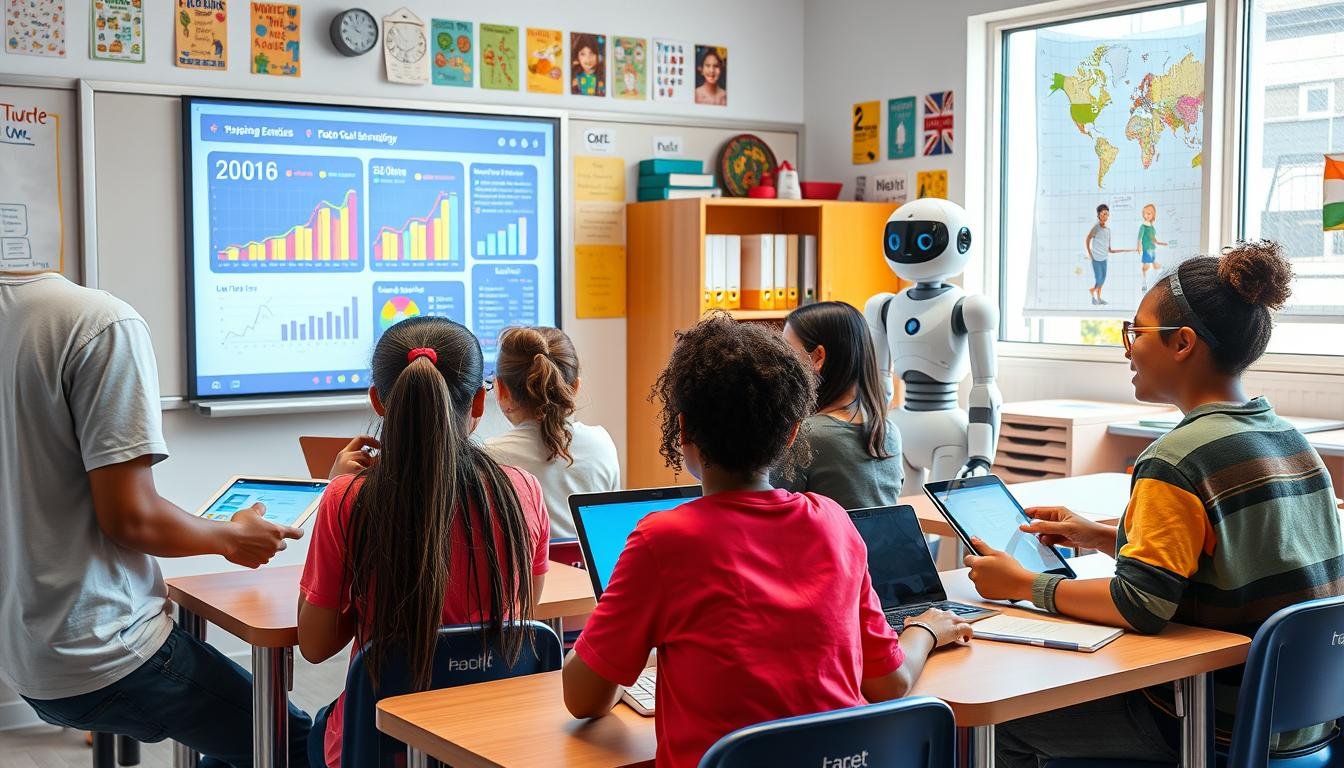
    AI-powered learning tools have changed education a lot. They make learning and teaching better, making school more fun and personal.

    Intelligent Tutoring Systems

    Intelligent tutoring systems are a big deal. They use smart algorithms to understand how students learn. They give feedback and lessons that fit each student’s needs.

    This makes students learn better and enjoy it more.

    Virtual Assistants and Chatbots

    Virtual assistants and chatbots are also important. They help students with their studies, like answering questions and giving tips. They even offer emotional support and help with time management.

    These tools use AI to make learning more personal and fun.

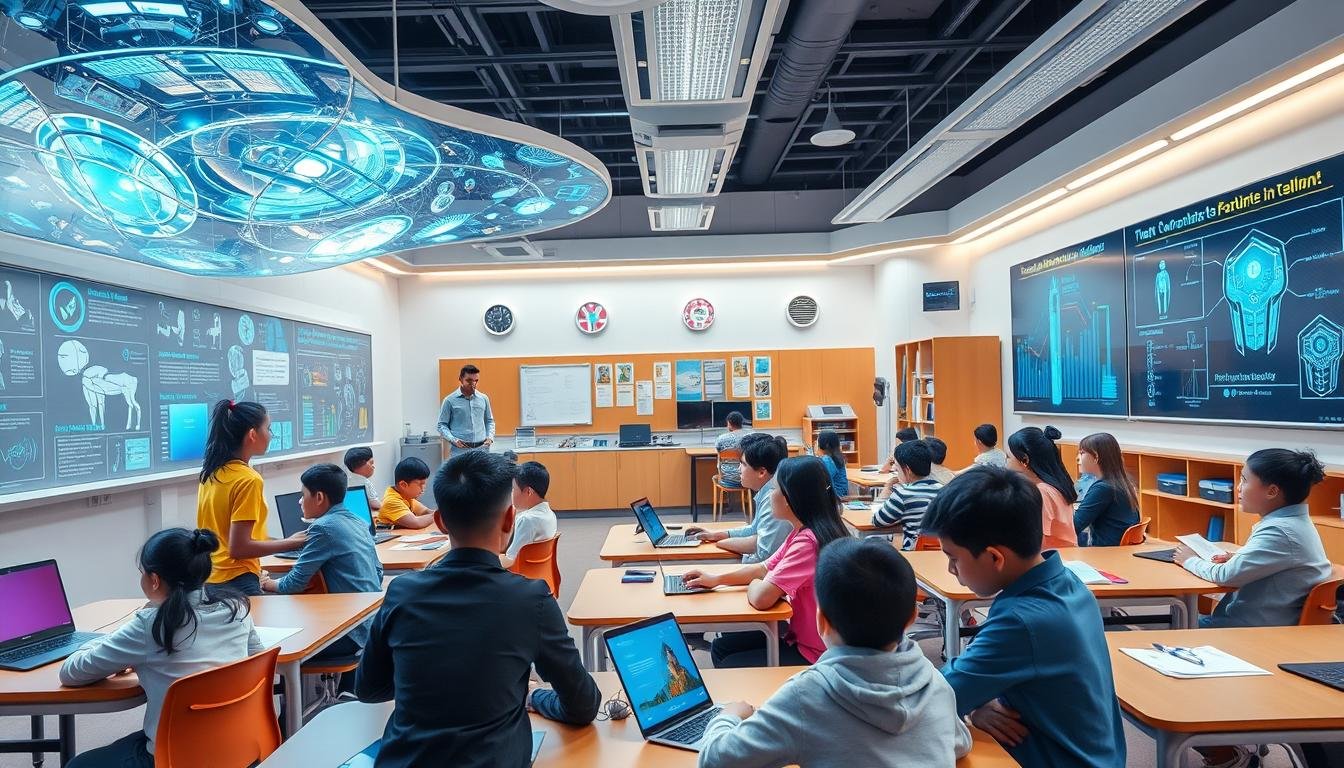
    Using ai-powered learning tools in schools can change everything. They help teachers and students in new ways. This leads to better learning experiences for everyone.
    “AI-powered learning tools are revolutionizing the way we approach education, offering new avenues for personalized instruction and enhanced student engagement.”

    Importance of AI in Education

    Artificial intelligence (AI) is changing education for the better. It’s making learning more engaging and effective for everyone. By using AI in education, we can make sure every student gets a personalized learning experience.

    AI helps make learning personal. It uses data to adjust lessons to fit each student’s needs. This approach keeps students interested and helps them do better in school.

    AI also helps teachers a lot. It can do tasks like grading, so teachers can focus on teaching. This makes teaching more rewarding and helps students learn more.

    AI brings new ideas to education. It can make learning fun with virtual and augmented reality. It also helps make learning materials available to everyone, no matter their background or ability.

    The role of AI in education is huge. It’s key to making learning fair and accessible for all. By embracing AI, we can help our students and teachers succeed.

    “AI in education is not about replacing teachers, but about empowering them to do what they do best – inspire, guide, and nurture the next generation of learners.”

    AI for Student Engagement

    In education, AI is changing how students learn and engage. It makes learning more fun, interactive, and tailored to each student. This new approach is exciting and effective.

    Gamification and Immersive Learning Experiences

    AI is making learning games that students love. It adjusts the game to fit each student’s needs and style. This makes learning fun and keeps students wanting more.

    AI also brings virtual and augmented reality to learning. These technologies take students on amazing educational journeys. They get to explore and learn in new, exciting ways.

    AI is making learning more engaging and effective. It creates personalized, interactive, and immersive experiences. This inspires students to do their best and succeed in school.

    AI-Assisted Teaching

    AI is changing education in exciting ways. It helps teachers by automating grading and assessment. This lets teachers focus on more important tasks.

    Automated Grading and Assessment

    AI tools are changing how teachers grade student work. They use natural language processing and machine learning. This makes grading fast and fair, saving teachers time.

    Teacher Support and Professional Development

    AI does more than just grade. It also helps teachers improve. AI platforms offer personalized advice and training. They analyze data to find areas where teachers need help, making them better at their job.

    FAQ

    What is the role of AI in education?

    Artificial Intelligence (AI) is changing education by offering tailored learning experiences. It boosts student interest and helps teachers. AI tools are making learning more effective and teaching easier.

    How does AI enable personalized learning?

    AI looks at how students learn and what they need. It creates learning plans that fit each student. It also gives feedback and support to help students succeed.

    What are some of the AI-powered learning tools being used in education?

    Tools like intelligent tutoring systems and virtual assistants are being used. They offer one-on-one instruction and help students stay engaged. Automated grading saves teachers time and gives accurate feedback.

    How does AI improve student engagement?

    AI makes learning fun with games and virtual reality. It tailors experiences to what students like and how they learn. This makes students more interested and active in their studies.

    How does AI assist teachers in their work?

    AI helps teachers by grading and assessing work automatically. It also supports teacher growth with personalized advice. This helps teachers improve their teaching skills.

    What are the ethical considerations around the use of AI in education?

    Using AI in education raises important questions. We must protect student data and ensure fairness. AI should be developed and used responsibly to benefit everyone involved.


  • Exploring the Potential of AI: Future Possibilities

    Imagine a world where technology is a big part of our lives. It changes how we work, live, and talk to each other. This is what Artificial Intelligence (AI) is making happen. As we get closer to an AI revolution, we see how amazing this tech can be.

    It can make healthcare better and help our planet. The future looks very bright.

    Our team recently saw AI’s power up close. We visited a top research lab and met a new AI system. It could spot complex health issues with amazing accuracy.

    This AI looked at lots of data and found things doctors might miss. Seeing this made us very excited and hopeful for the future of healthcare.

    Key Takeaways

    • Artificial Intelligence (AI) is changing the world fast, offering great possibilities for the future.
    • AI can change many areas, like healthcare, transportation, and saving the environment.
    • AI is making healthcare better by finding health issues and creating treatment plans just for you.
    • AI is also changing transportation by making cars drive themselves and making logistics better.
    • AI in education, finance, and security is promising to make things more efficient and safe.

    Unveiling the Remarkable Potential of AI

    Exploring artificial intelligence (AI) reveals its amazing power to change industries and our world. AI can handle huge amounts of data, spot complex patterns, and make choices on its own. This is changing many fields, from making things to managing money.

    AI’s Transformative Power

    AI’s strength is in making things better, faster, and more efficient. It helps businesses work smarter, automate tasks, and make decisions based on data. This leads to faster and more accurate choices.

    AI’s Impact Across Industries

    AI is changing how we solve big problems. In making things, AI makes production better and cuts down on mistakes. In finance, AI helps make smarter investment choices. Even in healthcare, AI improves diagnosis and treatment plans.

    IndustryAI’s Transformative Impact
    ManufacturingOptimized production, reduced errors, and enhanced efficiency
    FinanceAI-driven investment strategies, improved fraud detection, and personalized financial planning
    HealthcareAI-enabled diagnostics, personalized treatment plans, and improved patient outcomes

    As we learn more about AI, we see how it’s changing industries and opening up new chances for innovation. The future of AI is full of possibilities, and we’re just starting to see what it can do.

    The Era of Intelligent Automation

    We are entering an exciting era where AI opportunities are changing how we live and work. Intelligent automation, powered by AI innovations, is bringing a new age of efficiency. As we embrace this AI revolution, we will see amazing AI transformations in many industries.

    One big AI opportunity is making workflows smoother and decisions better. AI systems can look at lots of data, find patterns, and give smart advice fast and accurately. This change is helping businesses make smarter, data-based choices, leading to better productivity and savings.

    AI CapabilitiesIndustry Impact
    Automated data analysisImproved decision-making
    Predictive modelingEnhanced resource allocation
    Intelligent process optimizationIncreased operational efficiency

    As we dive into this AI revolution, we’re on the verge of a big change. From making workflows better to improving decision-making, AI opportunities are leading to a more efficient future. By using intelligent automation, we can unlock new AI transformations and innovations that will shape our future.

    “The true promise of AI lies in its ability to augment and empower human capabilities, rather than replace them. By working in tandem with AI, we can achieve unparalleled levels of efficiency and creativity.”

    Potential of AI in Healthcare Advancements

    The potential of AI in healthcare is huge. AI is changing how we diagnose and treat diseases. It helps find diseases early and gives more accurate diagnoses. AI also makes treatment plans that fit each patient’s needs, leading to better care.

    AI-Driven Diagnostics

    AI is making medical diagnoses better and faster. It uses advanced algorithms to look through lots of medical data. This helps doctors find diseases sooner and more accurately.

    Personalized Treatment Plans

    AI is also changing treatment plans. It helps doctors make plans that fit each patient’s unique situation. This means treatments are more effective and patients get better care.

    AI is making a big difference in healthcare. It’s leading to ai innovations and ai opportunities that are changing the field. AI helps find diseases early and makes treatment plans that fit each patient. This is moving us towards a future where medicine is more personalized and based on data.

    “The integration of AI in healthcare is not just a technological advancement, but a fundamental shift in the way we approach medical care, with the potential to save lives and improve patient outcomes.”

    AI and the Future of Transportation

    The future of transportation is about to change a lot, thanks to ai capabilities and ai innovations. Autonomous vehicles, powered by advanced AI technologies, will change how we travel. They will make our journeys safer, more efficient, and better for the environment.

    Autonomous Vehicles: A Smarter, Safer Journey

    AI-driven autonomous vehicles are changing the way we travel. These smart systems use ai advancements to drive on roads with great precision. They can handle different situations quickly, making our roads safer by reducing accidents.

    Optimized Logistics: Streamlining Deliveries with AI

    AI is also making the logistics industry better, making supply chains and transportation more efficient and green. AI innovations help with real-time route planning, predictive maintenance, and smart warehouse management. This leads to less waste, lower carbon emissions, and on-time deliveries.

    As we welcome AI opportunities in transportation, we’re looking at a future where moving around is easy, green, and meets our needs. The ai transformations in this field will change how we see and interact with the world.

    Unleashing AI Capabilities in Education

    The potential of AI in education is truly remarkable. By using AI capabilities, we can unlock new frontiers in personalized learning and teaching methods. AI-powered educational platforms can tailor learning experiences to individual needs, ensuring every student reaches their full potential.

    One of the transformative AI advancements in education is analyzing student data to find personalized learning paths. These adaptive systems adjust the pace, content, and teaching strategies based on each student’s unique strengths and weaknesses. This AI-driven personalization enhances the learning experience and addresses the diverse needs of students, creating a more inclusive and engaging educational environment.

    Moreover, AI innovations are changing how educational content is created and delivered. Intelligent software can generate customized learning materials and interactive simulations, making learning more dynamic and interactive. This AI-powered content creation allows educators to focus more on facilitating learning and less on content development.

    AI Capabilities in EducationBenefits
    Personalized LearningTailored learning experiences based on individual student needs
    Adaptive Teaching MethodsAdjustable pace, content, and strategies to enhance learning
    AI-Generated ContentEfficient and dynamic creation of educational materials

    As we continue to unlock the AI opportunities in education, we are poised to transform the learning landscape. We empower students to reach new heights of academic success and prepare them for the future’s challenges.

    “AI has the potential to revolutionize education, making learning more personalized, adaptive, and engaging for students of all backgrounds.”

    Potential of AI in Environmental Conservation

    Climate change and environmental damage are big challenges. But, AI capabilities in environmental conservation show great promise. AI models offer key insights for fighting climate change. They also change how we manage resources and protect the environment.

    AI for Climate Change Mitigation

    AI innovations are changing the game in climate change mitigation. AI can analyze huge data sets to predict weather and spot climate change hotspots. This helps us plan better for the future and fight climate change.

    AI-Powered Sustainability Solutions

    AI transformations are making a big difference in sustainable resource management. AI can improve energy grids, cut down waste, and boost renewable energy. It also tracks deforestation and pollution, helping us protect our ecosystems.

    Using AI capabilities in environmental conservation is a game-changer. As we explore more AI opportunities, we can imagine a future where technology and nature work together. This future is more sustainable and resilient for all.

    “AI has the potential to revolutionize the way we approach environmental conservation, empowering us to make data-driven decisions and create innovative solutions for a sustainable future.”

    AI Advancements in Finance and Banking

    The finance and banking sectors have seen a big change with AI capabilities. These changes are making the industry better in many ways. AI advancements are helping with everything from better investment plans to spotting fraud.

    AI-Driven Investment Strategies

    AI is changing how we manage money. It uses lots of data to find new patterns and predict what will happen in the market. This helps experts make smarter choices for investments.

    AI for Fraud Detection

    Keeping money safe is very important. AI transformations are leading the way in this fight. AI systems can spot and stop fraud quickly, making sure our money is safe.

    AI Advancements in Finance and BankingBenefits
    AI-Driven Investment StrategiesOptimized portfolio management, data-driven decision making
    AI for Fraud DetectionEnhanced security, real-time threat identification, reliable transactions

    These AI advancements are changing the finance and banking world. They bring more efficiency, security, and reliability. With AI capabilities growing, the future for finance looks very promising.

    The Potential of AI in Cybersecurity

    The potential of AI in cybersecurity is growing fast. AI systems can spot and fight cyber threats quickly. They use machine learning to find patterns that humans might miss. This is key to protecting our digital world.

    AI can look at lots of data fast and find threats. AI-powered systems watch networks closely. They catch and stop suspicious actions early, before harm can happen. This makes our digital defenses stronger.

    AI also helps us be proactive in security. AI-powered systems can find and fix problems before they start. This makes security work faster and more accurate, reducing the chance of mistakes.

    As AI in cybersecurity grows, so do new ways to protect us. We’ll see better ways to predict and handle threats. AI is changing how we keep our digital world safe.

    In short, AI is a game-changer for cybersecurity. Its growth will help keep our digital world safe. With AI-driven solutions, we can fight off cyber threats better and stay ahead of them.

    AI Opportunities in Creative Industries

    Technology keeps getting better, and the creative world is feeling the change. AI is making waves in art, music, and content creation. It’s changing how we think about creativity and making new things.

    AI-Generated Art and Music

    AI can now make amazing art and music that’s hard to tell apart from human work. AI art can look like famous artists or be totally new and thought-provoking. AI music mixes different styles and breaks rules, creating something new and exciting.

    AI for Content Creation

    AI is changing how we make and enjoy media. It helps create engaging and personalized content, like writing and videos. This makes creators work smarter and opens doors for new ideas.

    AI and creativity together show how powerful this tech is. As AI keeps improving, the possibilities in art, music, and content are endless.

    Ethical Considerations: Navigating the Potential of AI

    As we explore the vast AI opportunities and significant AI transformations, we face important ethical challenges. Privacy, data governance, algorithmic bias, and job impact are key areas to address. We aim to use AI innovations and AI disruptions for the betterment of society.

    At the core of this debate is the need to uphold our values. We aim to create AI systems that are open, accountable, and benefit individuals and communities. This means developing AI responsibly, focusing on privacy, fairness, and equal benefits.

    “As we harness the power of AI, we have a moral obligation to ensure that it enhances, rather than undermines, our shared humanity.”

    Addressing data privacy, algorithmic bias, and job displacement is crucial. This way, we can harness AI’s power while protecting human rights and dignity. Through teamwork, strong governance, and ethical commitment, we can make AI a force for good, leading to a fairer, more sustainable future.

    As we venture into this new territory, staying alert, proactive, and morally responsible is key. This way, we can fully realize the AI opportunities and make the AI revolution work for everyone’s benefit.

    Conclusion: Embracing the AI Revolution

    We are at the start of a big change thanks to artificial intelligence (AI). AI is changing many parts of our lives, like healthcare and education. By using AI wisely, we can look forward to a future full of new chances and big steps forward.

    The AI revolution is here, and it’s time to use its power. AI is getting better fast, helping us solve big problems in new ways. It’s changing healthcare, transportation, and more, making things better for everyone.

    As we go on, we must understand AI’s big questions. We need to make sure AI is fair and open, protecting everyone’s rights. By finding the right mix of new ideas and careful use, we can make AI work for the best of us all.

    FAQ

    What is the potential of AI, and how is it transforming our world?

    Artificial Intelligence (AI) is changing our world fast. It’s showing us a future full of amazing possibilities. AI is making big changes in fields like healthcare, transportation, education, and the arts.

    By using AI, we’re finding new ways to innovate, work more efficiently, and make progress. This will change how we live and work for the better.

    How is AI impacting different industries?

    AI is changing many industries in big ways. In healthcare, AI helps find diseases early and gives treatments that fit each person. In transportation, self-driving cars and smarter logistics are changing how we move and get goods.

    In education, AI helps tailor learning to each student. This ensures everyone can reach their full potential. AI is making big changes across many areas, solving complex problems and opening up new opportunities.

    What are the advancements in AI-powered automation?

    We’re seeing a new era of smart automation with AI. AI is making things more efficient and helping us make better decisions. This is changing how we work and live, making many tasks easier and more productive.

    How can AI be used to address environmental challenges?

    AI is key to solving environmental problems like climate change. It helps us understand how to fight climate change better. AI is also changing how we manage resources and protect the environment.

    By using AI, we can tackle big environmental issues and find new ways to care for our planet.

    What are the ethical considerations surrounding the development and deployment of AI?

    As AI grows, we must think about its ethics. We need to consider privacy, data use, bias in algorithms, and job impact. We must make sure AI benefits everyone and doesn’t harm us.

    By being careful and responsible with AI, we can use its power for good. This way, we protect our values and the well-being of all people and society.

  • AI as a game changer

    AI as a game changer

    Artificial intelligence (AI) is changing the world in big ways. It’s making a huge impact on many areas. We’ll look at how AI is changing healthcare, transportation, and logistics.

    We’ll also talk about the important issues that come with AI. This includes fairness, privacy, and keeping data safe. By the end, you’ll know more about AI’s power and how it will change our world.

    Key Takeaways

    • Artificial intelligence (AI) is revolutionizing industries and sectors across the globe.
    • AI is driving advancements in healthcare, transportation, and logistics, among other areas.
    • The rise of AI raises important ethical considerations, including bias, fairness, privacy, and data security.
    • Understanding the transformative power of AI is crucial for navigating the future.
    • Embracing the AI revolution is essential for individuals and organizations to stay ahead of the curve.

    Introduction: The Dawn of the AI Revolution

    We are on the edge of a big change, thanks to fast progress in artificial intelligence (AI). This tech is changing our world in many ways. It’s affecting healthcare, transportation, finance, and more. The AI revolution is happening now, and it will keep growing.

    At the heart of this change is AI getting better really fast. What was once science fiction is now real. AI can now do many things, like understand language and make decisions on its own. This is making new things possible.

    As we move into this AI revolution, we must get ready for big changes. These changes will affect many areas of our lives. In the next sections, we’ll look closer at AI, its effects on different fields, and the important questions it raises.

    “The true sign of intelligence is not knowledge but imagination.” – Albert Einstein

    Let’s start exploring the AI revolution together. We’ll uncover the secrets of this powerful tech and see how it will change our future.

    Understanding AI: Demystifying the Technology

    The world is changing fast thanks to artificial intelligence (AI) technology. It’s key to grasp the basics of this field. We’ll explore AI’s definition, how it evolved, and its different forms.

    What is Artificial Intelligence?

    Artificial intelligence lets machines do things that humans do, like learning and solving problems. It uses complex algorithms and powerful computers. This way, machines can think and act like us in some ways.

    The Evolution of AI: From Narrow to General AI

    AI has grown a lot, with two main types: narrow AI and general AI. Narrow AI is good at specific tasks, like playing chess. General AI, or AGI, aims to be as smart as humans, doing many things well.

    Narrow AI has made big strides in many areas. But, making general AI is a big challenge. It needs to be as smart as us. As AI research keeps going, its power to change our world grows.

    AI in Action: Transforming Industries and Sectors

    Artificial intelligence (AI) is changing the game in many fields. It’s making industries more efficient and innovative. We’ll look at how AI is changing healthcare and transportation.

    Healthcare and Medical Advancements

    AI is changing healthcare in big ways. It helps doctors find diseases early and find new treatments faster. AI looks at lots of data to spot things humans might miss.

    It’s also making drug discovery quicker and cheaper. AI can analyze medical images and predict patient outcomes. This is making healthcare better and more efficient.

    Revolutionizing Transportation and Logistics

    AI is changing how we move people and goods. Self-driving cars are making travel safer and more efficient. They also help reduce traffic and save fuel.

    In logistics, AI is streamlining supply chains. It helps manage inventory and plan routes better. This leads to happier customers and lower costs for companies.

    AI is changing our lives in many ways. As it keeps getting better, we’ll see even more amazing changes.

    How AI Will Change the World

    Artificial intelligence (AI) is growing fast, and it’s changing the world. It promises big changes in education, sustainability, and more. This section explores how AI will shape our future.

    AI is set to change education a lot. It will make learning personal for each student. AI can give feedback and adjust lessons to fit each student’s needs.

    AI will also help solve big sustainability problems. It can analyze lots of data to find better ways to use resources. This includes making cities smarter and farming more efficiently.

    AI will automate many tasks, but it will also create new jobs. It will free up people to do more creative work. This will change the job market and what skills are needed.

    As we move into an AI-driven future, we must think about ethics. We need to make sure AI is fair and protects our privacy. This will help AI make our lives better, not worse.

    AI’s impact on society will be huge. By understanding its benefits and challenges, we can make a future where AI improves our lives and communities.

    The Ethical Considerations of AI

    Artificial intelligence (AI) is changing the world, but it raises big ethical questions. AI has many benefits, but we must tackle issues like bias, fairness, privacy, and data security. This ensures AI is developed and used responsibly.

    Addressing Bias and Fairness in AI Systems

    AI can make old biases worse if not designed right. Biases can sneak in during data collection and training. We need AI that is fair, transparent, and includes everyone.

    Privacy and Data Security Implications

    AI’s growth worries us about privacy and data safety. AI handles lots of personal info. We must create strong rules to protect privacy and keep data safe. This builds trust in AI.

    Ethical ConsiderationKey ChallengesPotential Solutions
    AI Bias and FairnessBiased data and algorithms Lack of diversity in AI development teams Discriminatory outcomes against marginalized groupsTransparent and accountable AI development processes Diverse and inclusive AI teams Rigorous testing and auditing for bias and fairness
    AI Privacy and Data SecurityMassive data collection and processing Potential for data breaches and misuse Lack of clear legal and regulatory frameworksRobust data governance policies and protocols Strong data encryption and access controls Comprehensive data privacy regulations

    By tackling these issues, we can make AI better. We aim for AI ethics, AI fairness, and AI privacy. This way, AI can help us without harming anyone.

    “The greatest challenge for AI is not to create superintelligent machines, but to create ethical, trustworthy, and beneficial AI systems that enhance and empower humanity.”

    Preparing for an AI-Driven Future

    The AI revolution is changing industries and the job market. It’s important to prepare our workforce for this new future. Upskilling and reskilling will help individuals and organizations thrive in this fast-changing world.

    Upskilling and Reskilling for the AI Workforce

    AI has created new job opportunities and a need for specialized AI skills. Employees must get the right AI skills and knowledge to stay competitive. This can mean taking AI education courses, attending workshops, or learning on their own.

    Employers also need to invest in AI workforce development. They should offer in-house training, partner with schools, or start mentorship programs. This helps employees learn new skills and adapt to the job market transformation caused by AI.

    AI Skills in High DemandEmerging AI-Powered Job Roles
    Machine Learning Natural Language Processing Computer Vision Data Analysis Automation and OptimizationAI Strategist Machine Learning Engineer Robotics Technician Predictive Analytics Specialist AI Ethics and Compliance Officer

    By developing AI skills and embracing the AI workforce transformation, we can succeed in the AI-driven future.

    Conclusion: Embracing the AI Revolution

    The AI revolution is already changing the world. It’s transforming industries and our daily lives. The power of artificial intelligence is clear.

    The potential of AI is huge, but we must think about its ethics. By embracing AI, we can make our world better. It can make our lives more efficient and innovative.

    The AI revolution is here to stay. We must navigate it wisely and ethically. This way, we can usher in a new era of progress for everyone.

    FAQ

    What is Artificial Intelligence (AI)?

    Artificial Intelligence (AI) is a field in computer science. It deals with making machines smart. These machines can do things that humans usually do, like learn, solve problems, and understand language.

    How is AI transforming industries and sectors?

    AI is changing many fields, like healthcare and transportation. In healthcare, it helps with diagnosing and finding new treatments. Transportation makes people and goods moving around safer and more efficient.

    What are the ethical considerations of AI?

    AI raises important ethical questions. We need to make sure it’s fair and doesn’t harm privacy. It’s also important to use AI in ways that respect our values and improve society.

    How can we prepare for an AI-driven future?

    To get ready for AI, we need to learn and grow. We should invest in education and training. This way, we can all adapt and succeed in a world with AI.

    What is the potential impact of AI on society?

    AI could change education and help the environment. It could also make some jobs easier and create new ones. But, we must also think about the challenges it brings, like job loss and bias.

  • 8 Comprehensive Guides to Remote Careers in Education

    8 Comprehensive Guides to Remote Careers in Education


    “Education is the most powerful weapon which you can use to change the world. Nelson Mandela

    “The roots of education are bitter, but the fruit is sweet.”Aristotle

    In recent years, remote education has evolved from a niche offering to a mainstream approach to learning, driven by technological advances and changing societal needs. The global shift towards online learning was accelerated by the COVID-19 pandemic, which forced educational institutions and professionals to rapidly adopt remote teaching methods.

    As a result, online education platforms, virtual classrooms, and digital learning tools have become integral to the educational landscape. This change has not only widened access to education worldwide but also provided new opportunities for educators to teach and collaborate from anywhere in the world.

    Increasing Demand for Remote Careers in Education: Opportunities for Educators

    Demand for remote educators and professionals has increased as educational institutions and learners recognize the benefits of flexible, accessible learning environments. Remote learning is no longer limited to traditional school settings. Online universities, tutoring services, corporate training programs, and education tech companies now embrace it.

     As the online education market continues to grow, so does the need for skilled professionals in a variety of roles, including remote teachers, instructional designers, curriculum developers, and educational consultants. This growing demand has created numerous opportunities for educators to pursue remote careers, offering the flexibility to work across borders and adapt their skills to diverse learning needs.

    Top Reasons to Pursue Remote Careers in Education

    How Remote Careers in Education Offer Flexibility and Work-Life Balance

    One of the biggest benefits of a remote career in education is the flexibility it provides. Unlike traditional in-person education, remote education allows teachers to design their own schedules, balancing personal and professional responsibilities more easily. This flexibility is especially valuable for those with family commitments, side projects, or a need for a more flexible work-life balance. Remote learning eliminates travel time, offering more control over when and where you work, whether from home, a cafe, or another country.

    Global Opportunities for Remote Careers in Education

    Remote education opens up the possibility of working with students and organizations from all over the world. Geographic boundaries no longer limit teachers and can access teaching positions, projects, and collaborations from international institutions, schools, and online platforms. This global reach not only enhances career development, but also enables professionals to interact with diverse student populations, gain broader perspectives, and enrich their teaching experiences. Whether it’s teaching students in another country or consulting for global education firms, the opportunities for advancement are vast.

    Exploring Diverse Remote Careers in Education Beyond Teaching

    Remote careers in education go beyond traditional teaching roles. While teaching remains central, many other career paths are emerging within the digital education ecosystem. For instance, curriculum designers play a key role in developing engaging online courses, instructional designers create interactive content, and educational consultants advise institutions on how to improve their online learning environments. Additionally, tutoring, mentoring, and EdTech development are growing fields, offering a wide variety of career options for educators looking to diversify their professional journey.

    Navigating the Remote Education Landscape: Key Roles and Career Paths

    A. Key Roles in Remote Careers in Education

    Teaching (K-12, college, adult education)

                Remote teaching opportunities span from early childhood education to higher education and adult education. Teachers can work in virtual schools, online universities, or even one-on-one tutoring setups, covering subjects ranging from basic academics to specialized topics.

     Educational Technology (EdTech) Support and Development:

                EdTech has become an integral part of the remote learning ecosystem. Professionals working in this space help educators and institutions integrate new technology into their learning systems, solve tech problems, and improve digital classrooms with the latest innovations.

    Curriculum development and instructional design

    Curriculum developers and instructional designers create learning materials designed for remote or hybrid learning environments. They focus on making content engaging, interactive, and suitable for online platforms, helping to ensure that students receive quality remote learning.

     Educational counseling and coaching:

    Education consultants work with schools, universities, and online platforms to improve their remote teaching methods, helping them adapt to digital tools and improve virtual learning experiences. Coaches, on the other hand, can guide fellow teachers or coach students on how to succeed in an online learning environment.

    B. How Online Learning Platforms are Shaping Remote Careers in Education

      Overview of popular platforms:

    Platforms like Udemy, Coursera, and Khan Academy have revolutionized how people access education. These platforms offer a wide range of courses in various disciplines, from professional certifications to personal development classes. They allow teachers to create content and deliver it to a global audience, reaching learners of all ages and backgrounds.

    How these platforms have changed remote careers in education:

    These online learning platforms have expanded the scope of remote education careers by giving educators the ability to scale their knowledge and skills to reach thousands of learners. Teachers, curriculum developers, and instructional designers can create courses, market them to a wider audience, and earn revenue through course enrollment or platform partnerships. It has democratized education, giving learners access to expert knowledge while providing teachers with new ways to build successful careers.

    C. Essential Skills for Remote Careers in Education

     Teaching and communication skills

                The Importance of Effective Communication in a Virtual Environment requires clear and concise communication as body gestures and body language are less noticeable. Strong communication skills help teachers deliver instruction effectively and ensure students understand key concepts.

     Engaging students remotely

                Keeping students engaged in a virtual classroom can be difficult. Using interactive tools like polls, quizzes, and breakout rooms in platforms like Zoom or Google Classroom can increase participation. Adding multimedia elements such as videos, presentations, and gamified learning can also keep the experience dynamic.

    Technical skills

    Proficiency in online tools such as Zoom, Microsoft Teams, and Google Classroom is essential. These platforms help teachers manage live lessons, conduct assessments, and facilitate effective communication.

     Using Learning Management Systems (LMS) effectively

    LMS platforms such as Moodle or Blackboard allow teachers to organize course content, assign assignments, and track student progress. Knowing how to navigate and optimize these systems is critical to providing a smooth and structured learning experience. 

    Time management and maintaining productivity

    Remote work requires strong time management skills to avoid distractions and maintain productivity. Setting specific work hours and using tools like digital planners or task managers can help manage the workload.

    Balancing workloads across different time zones

    When teaching students or collaborating with educators from different time zones, it is important to create a flexible schedule that accommodates different time zones without overextending work hours.

    D. How to Build a Remote Teaching Portfolio for Remote Education Careers

    Create Your Presence:

    Developing a website or blog to showcase expertise means that having a personal website or blog helps teachers highlight their experience, achievements and teaching philosophy. It serves as a digital portfolio that potential employers can easily access.

                Social media platforms such as LinkedIn, Twitter, or Facebook can be used to network with other educators, share knowledge, and explore new opportunities in remote education. Building an active presence on these platforms increases visibility within the industry.

    Highlighting certifications and qualifications

                The importance of obtaining certification in TEFL, TESOL, or specific courses in remote education such as Coursera and Udemy demonstrates expertise in online teaching methods and tools. These certifications help build credibility and make educators stand out in a competitive job market.

    Highlighting degrees, certifications, and professional development courses on your resume or portfolio assures potential employers of your qualifications and commitment to advancing your education.

     E. Exploring Job Opportunities for Remote Careers in Education

      Popular job boards for educators

     Websites such as TeachAway, Remote.co, and FlexJobs are dedicated to listing remote teaching positions, curriculum development jobs, and other education roles. Regularly checking these platforms increases the chances of finding the right opportunity.

                Networking with fellow teachers, and joining online communities and forums, such as LinkedIn or professional educator groups, can help you find job leads, share resources, and make connections that lead to remote teaching roles.

     F. How to Apply for Remote Careers in Education Successfully

      Crafting a strong resume and cover letter

                Tailor your resume and cover letter to highlight your experience in online teaching, relevant certifications, and your technical expertise with remote education tools. Be sure to emphasize any experience related to working remotely, as this is a key consideration for many employers.

      Highlight remote teaching or online learning experiences in interviews

                During interviews, discuss any past experience you have with remote teaching, online learning platforms, or virtual collaboration. Providing examples of how you’ve successfully engaged students or tackled technical challenges can help set you apart.

    Succeeding in a Remote Education Career  Building Strong Connections with Scholars and Associates  Strategies for Effective Student Engagement in Virtual Classrooms  In a virtual setting, it’s important to make assignments interactive. Using tools like rout apartments,  pates, and discussion boards helps keep scholars involved. Checking in with scholars regularly also helps maintain a connection and ensures they’re following along.

    Maintaining Collaboration with Remote Associates and Directors Regular communication through emails,  videotape meetings, or collaboration tools like Slack can help stay connected with associates. Participating in coffers and updates ensures everyone is on the same runner and working towards common pretensions.   Continuing Professional Development  Staying Up-to-Date with New Educational Technologies and Methodologies  The world of education is always evolving, especially in remote literacy. Keep up with new tutoring tools and styles by reading papers, watching tutorials, and sharing in preceptor communities.

    Joining Online Courses and Webinars to Enhance Tutoring Chops  Enroll in online courses and attend webinars to continue developing your chops. This not only helps you stay current but also enhances your capability to use the most tools and ways in your virtual classroom.

    G. How to Overcome Challenges in Remote Careers in Education

    Managing loneliness and burnout

    Addressing the common challenges of working remotely like Working from home can feel isolating, so it’s important to schedule regular check-ins with colleagues, take breaks, and maintain a support system. Recognize the signs of burnout early and take time to recharge.

    Tips for maintaining a healthy work-life balance

    Set clear boundaries between work and personal time. Create a dedicated workspace and establish a consistent daily routine. Scheduling downtime and sticking to your work hours help prevent burnout.

     G. Adapting to Different Learning Styles and Technologies in Remote Education

    Understanding the needs of students in a virtual setting

    Not all students learn the same way. It’s important to know that some may need more visual aids, while others prefer audio or written material. Being flexible and adapting your teaching style ensures that all students can succeed.

    Use of adaptive tools and resources to meet diverse learning preferences

    Use technology to provide different ways of learning. Tools like video lessons, interactive quizzes, and personalized assignments let students engage with content in ways that work best for them.

    Conclusion

    Embracing Remote Careers in Education

    To succeed in remote education, focus on building strong relationships, staying up-to-date with new technologies, and continuously developing your skills. Effective communication and time management are key.

    Encouragement to Start Your Remote Journey

    A remote career in education offers flexibility, global opportunities, and the chance to make a lasting impact on students’ lives. Start building your path today and embrace the rewards of teaching in the digital age!


    The journey of a thousand miles begins with a single step. As you consider a career in education, remember that every effort you make contributes to a brighter, more informed, and empowered future. Your work as an educator will leave an indelible mark on the lives of those you teach. Embrace this opportunity with open arms, and let your passion drive you to create lasting change. The world awaits your impact—go forth and make it count!